
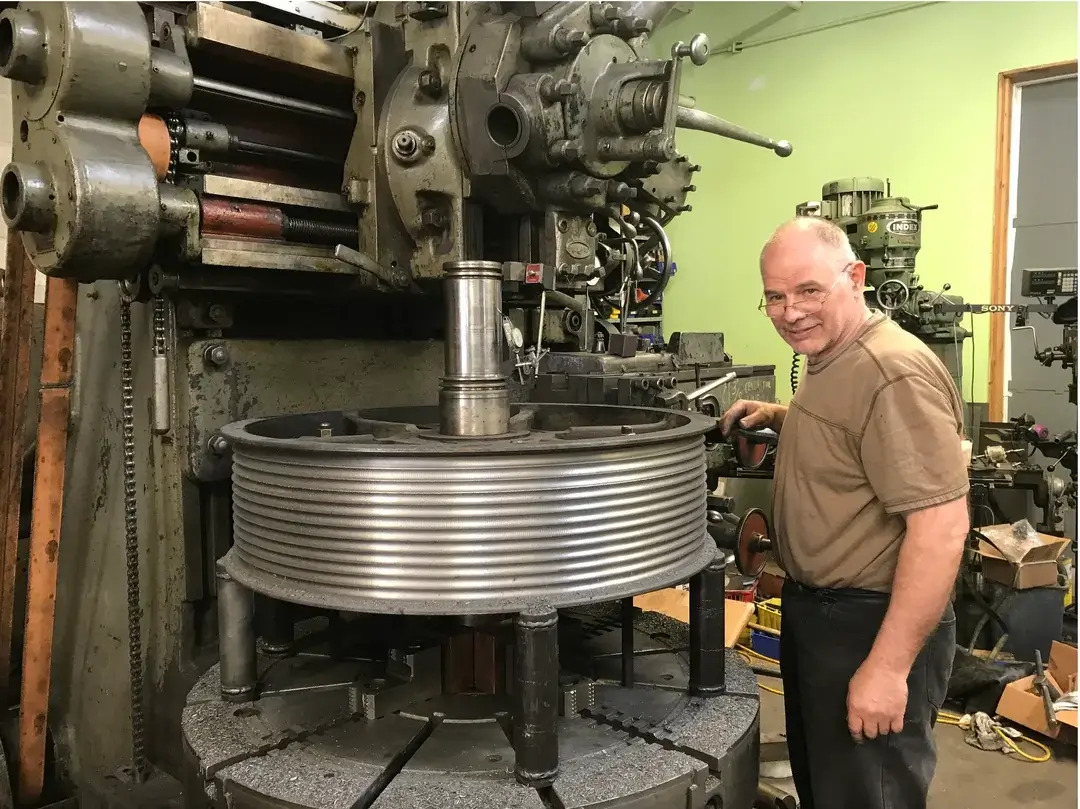
Almost nobody checks a regroove once it’s finished. The elevator runs again, so the job looks done. A year or two later the ropes start breaking wires earlier than they should, and by then nobody thinks to go back and look at the sheave.
The ropes get replaced and the building puts it down to the cost of having elevators. I get called into buildings where someone else cut the sheave and the geometry is wrong. Usually it’s wrong by enough that anyone who put a gauge on it would have seen it. The building had no idea, because a running elevator tells you nothing about whether the grooves are even.
These are the things I check. You can check most of them yourself.
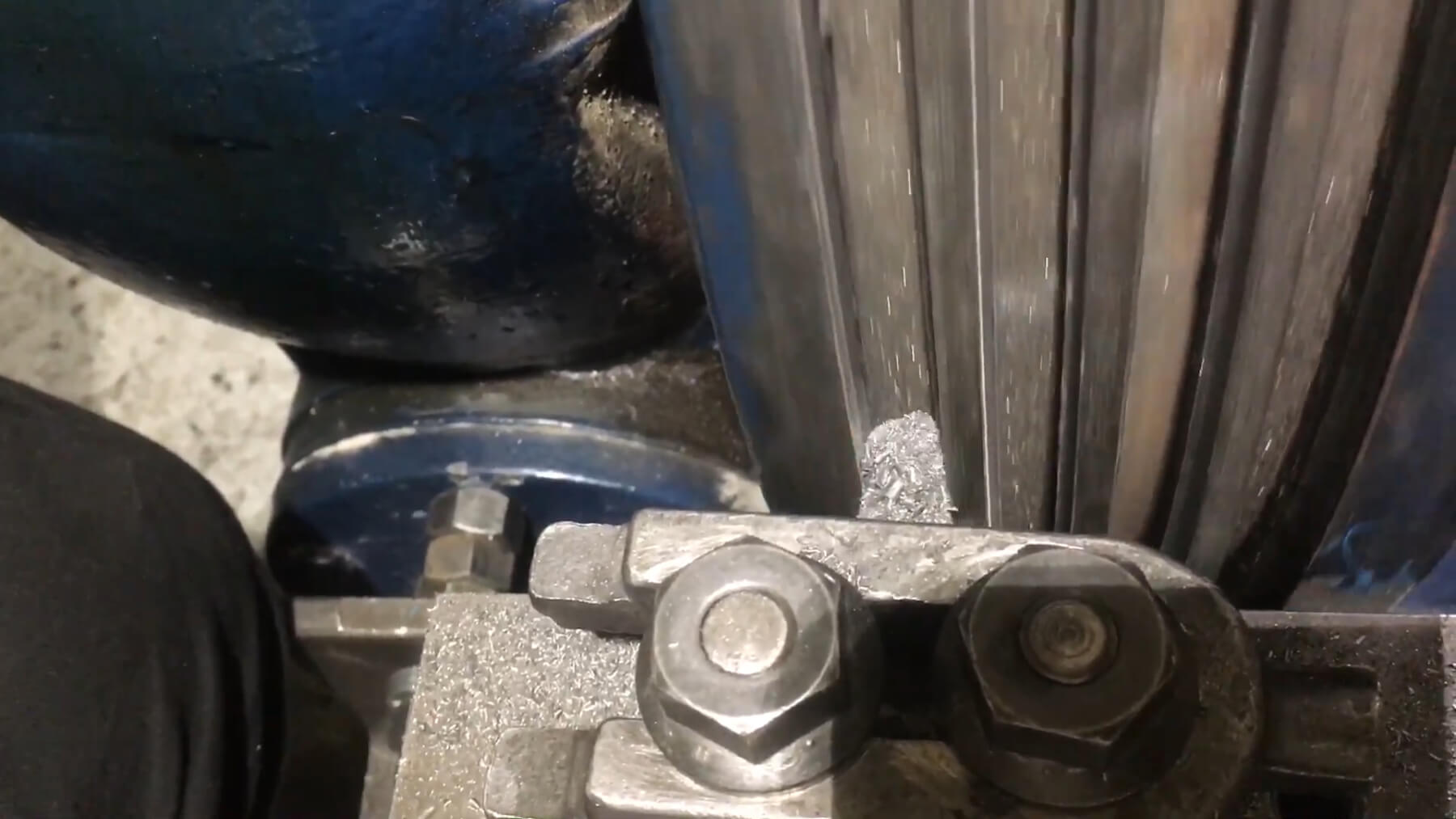
01. Depth, on every groove
This is the one that’s wrong most often.
Every rope has to sit at the same effective diameter. If one groove is cut deeper than the one next to it, that rope runs on a smaller circle and takes a different share of the load. You can’t fix that at the hitch. You can adjust tension all day and it won’t equalize, because it isn’t a tension problem.
How to check it
Measure the seat depth in every groove with a groove gauge or a depth micrometer, then compare them across the set. They should read the same. When they don’t, it isn’t usually subtle once there’s a gauge in there.
If the ropes won’t tension evenly after a proper adjustment, stop adjusting and measure the grooves.
02. The groove profile
U, undercut U, or V. The profile decides how much traction you get and how much pressure goes through the rope. Too much traction and the rope gets crushed. Too little and it slips. A U-groove that’s worn down into a V pinches the rope, and that pinch breaks wires on the inside, where you won’t see them in a visual inspection.
A proper regroove puts back the profile the machine was built for.
How to check it
Seat a profile gauge in the groove. There shouldn’t be a gap at the bottom, and there shouldn’t be daylight where the rope is meant to bear.
03. How much rim is left
Every regroove takes metal off, and there’s a limit. Once you’re past it the sheave is weakened and needs replacing. Most sheaves can be cut more than once, but not indefinitely, and somebody has to be willing to say when it’s finished.
How to check it
Ask what the remaining rim thickness is, and whether the sheave can be cut again next time. If nobody can tell you, nobody measured it. How much is enough depends on the sheave and what it’s carrying, which is exactly why it gets measured rather than guessed.
04. Whether it runs true
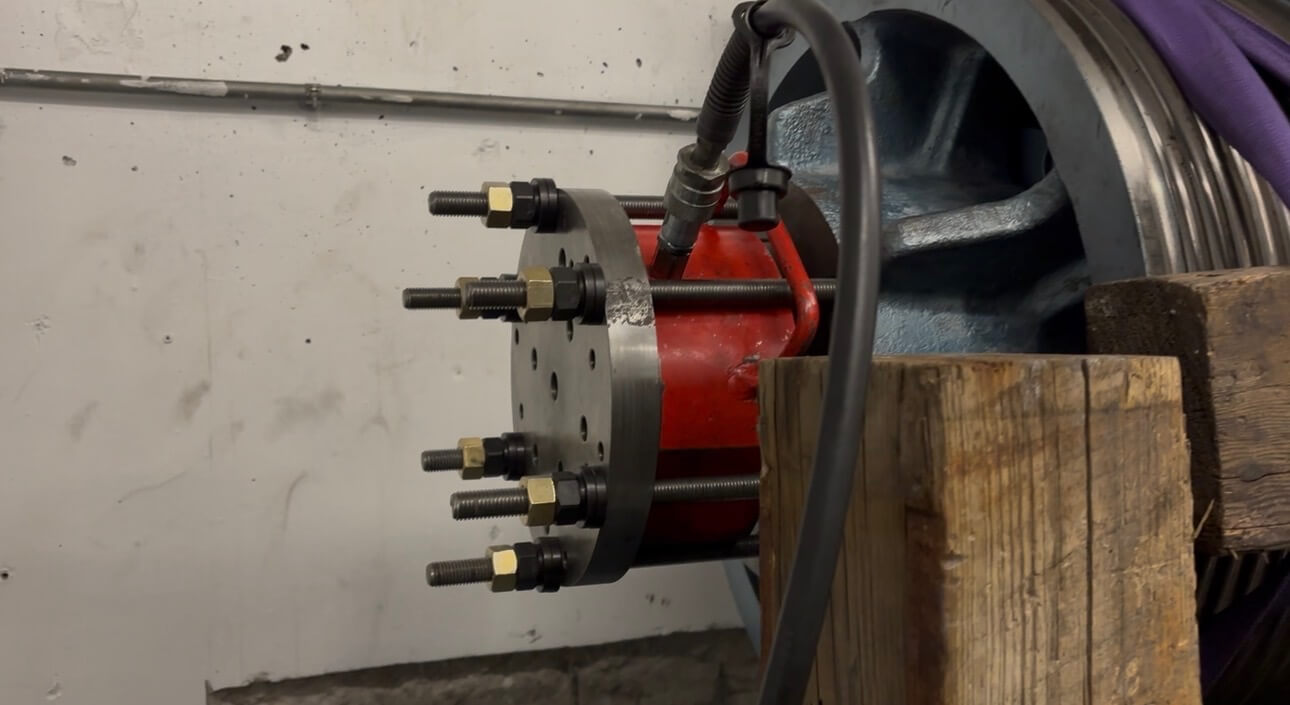
A sheave cut off-center runs out of round, and that shows up as vibration. The vibration usually gets blamed on the guides, or the ropes, or the machine.
How to check it
A dial indicator against the sheave while it turns. If the needle is moving enough to see, ask why.
05. The surface finish
Too rough and the groove wears the rope. Too polished and you lose traction. The finish comes from how the cut was made, and you can’t correct it afterwards by sanding it.
How to check it
Run a clean rag through the groove. It shouldn’t catch, and you shouldn’t see chatter marks or steps where the tool jumped.
06. Ask what the numbers were
This one needs no tools at all, and it sorts out most bad work on its own.
Ask whoever did the job what they measured. Depth on each groove, the profile, how much rim was left, the runout. Somebody who measured can tell you without having to think about it. Somebody who eyeballed it will tell you the elevator runs fine, or that this is how it’s always been done.
Nobody is grading the work
Regrooving is specialized and not many people do it. So whoever is buying it, usually a building engineer or a property manager, has no way to judge what they got and nobody to ask for a second opinion. The work gets judged on whether the elevator runs when the truck pulls away.
Every elevator runs when the truck pulls away. You find out whether the job was any good when the ropes come up for replacement.
If you want someone to look at it
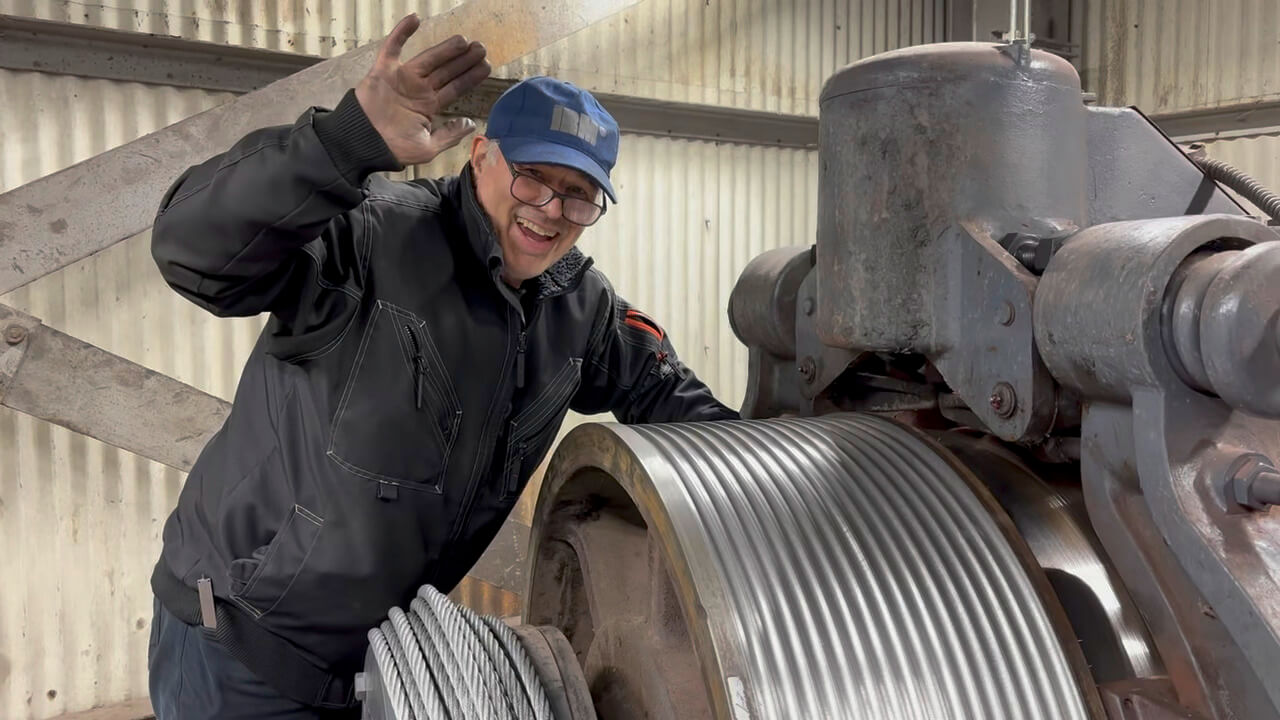
If another contractor has already cut your sheave and you want it checked, I’ll come out and measure it, then tell you what I found and what I’d do about it. If it was cut right, I’ll say so.
Here’s how a second opinion works.
Read more about on-site elevator sheave regrooving.

